Previous
Next
Description
Metro train washing involves a combination of automated exterior cleaning and intensive interior maintenance to ensure hygiene and vehicle longevity. Modern systems prioritize speed, often cleaning an entire train set in 3 to 10 minutes.
2. Exterior Washing (Automatic Metro Train Wash Plant)
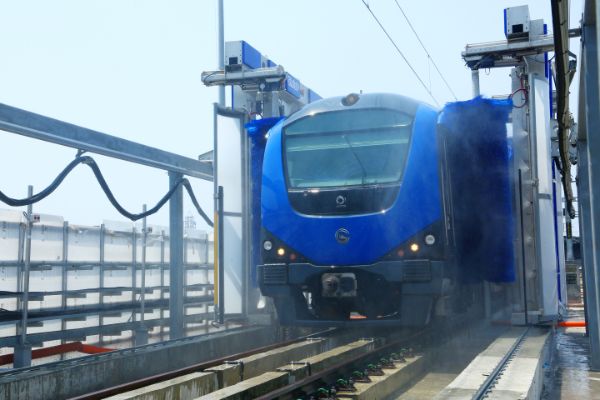
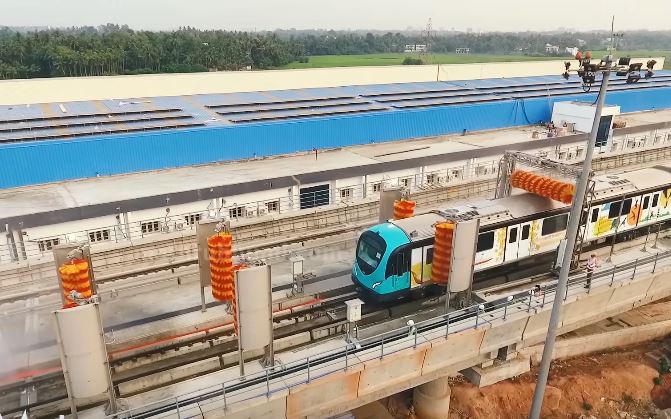
Most metro systems utilize a Drive-Through or Automatic Train Wash Plant (ATWP) located at maintenance depots.
- Process Stages:
- Activation: Photocells or sensors detect the train as it enters the plant, automatically triggering the wash sequence.
- Pre-Wetting & Chemical Application: Nozzles spray water and a detergent or alkaline solution to soften dirt.
- Brushing: Large rotating vertical and horizontal brushes scrub the sides, roof, and front/rear “nose” of the train.
- High-Pressure Rinsing: Jets of water (sometimes demineralized for a spot-free finish) rinse away detergent and grime.
- Waxing/Polishing: A wax or polish spray may be applied to help the train dry faster and protect the paint.
- Drying: High-speed fans blow air to dry the exterior surfaces.
- Efficiency: Systems are designed for minimal downtime, with some plants capable of washing up to 200 carriages per hour.
3. Sustainability and Advanced Features
- Water Recycling: Modern plants are highly sustainable, often recycling 60% to 80% of the water used. For example, a 4-coach train may use 2,000 liters, with 1,600 liters reused after treatment.
- Safety Retraction: If a train moves too fast or a technical error occurs, brushes automatically retract to prevent damage.
- Specialized Units: Some depots feature elevated plants (on ramps) to save space or specialized under-frame/bogie washing systems to remove oil and grease from mechanical components.
Gallery